

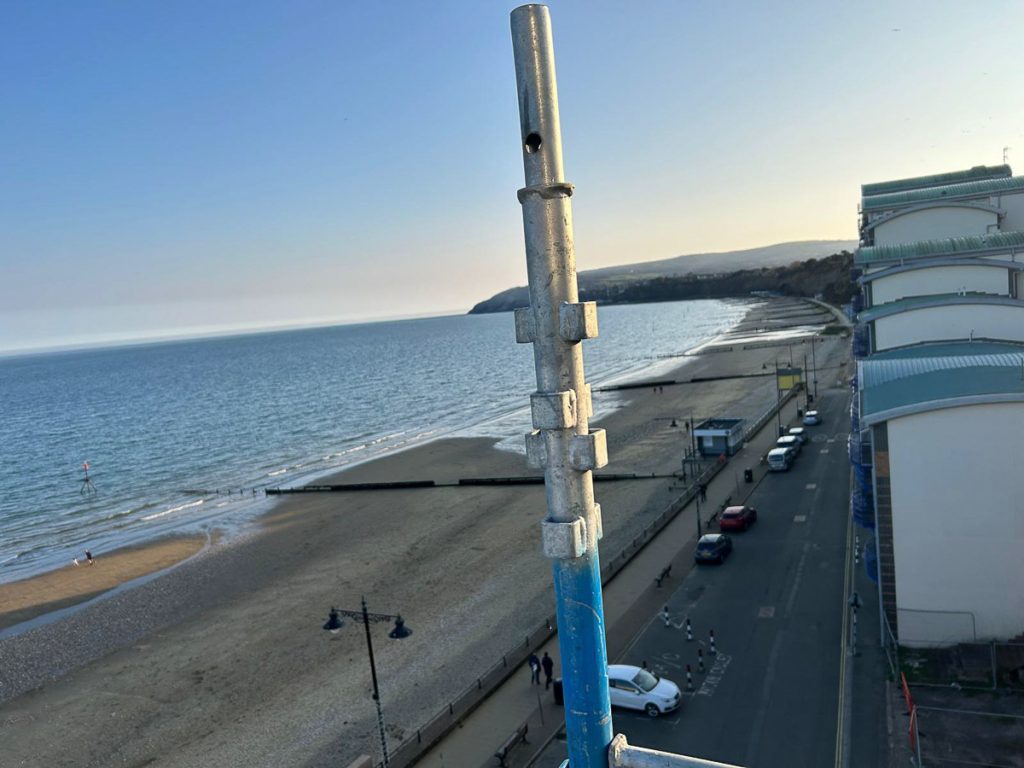
Coastal buildings in the UK face some of the harshest environmental conditions anywhere in Europe. Daily exposure to salt-heavy air, wind-driven rain, moisture fluctuations, UV intensity and rapid thermal cycling creates the perfect storm for render failure. For trades, surveyors and retrofit professionals working along coastlines, the question is no longer about merely surviving these conditions but rather identifying the best render for coastal properties to ensure durability and longevity.
“What render looks best?”
but:
Through extensive field testing, EN-standard laboratory verification, and decades of performance across Mediterranean, Atlantic and UK coastlines, one material has consistently proven its resilience:
Supplied, warranted and technically supported in the UK by ECOPROCORK®.
This blog explains why cork survives where all other render types fail, the science behind its salt resilience, and how the DECOPROYEC® system outperforms every cement, lime, acrylic, silicone and polymer render in coastal environments.
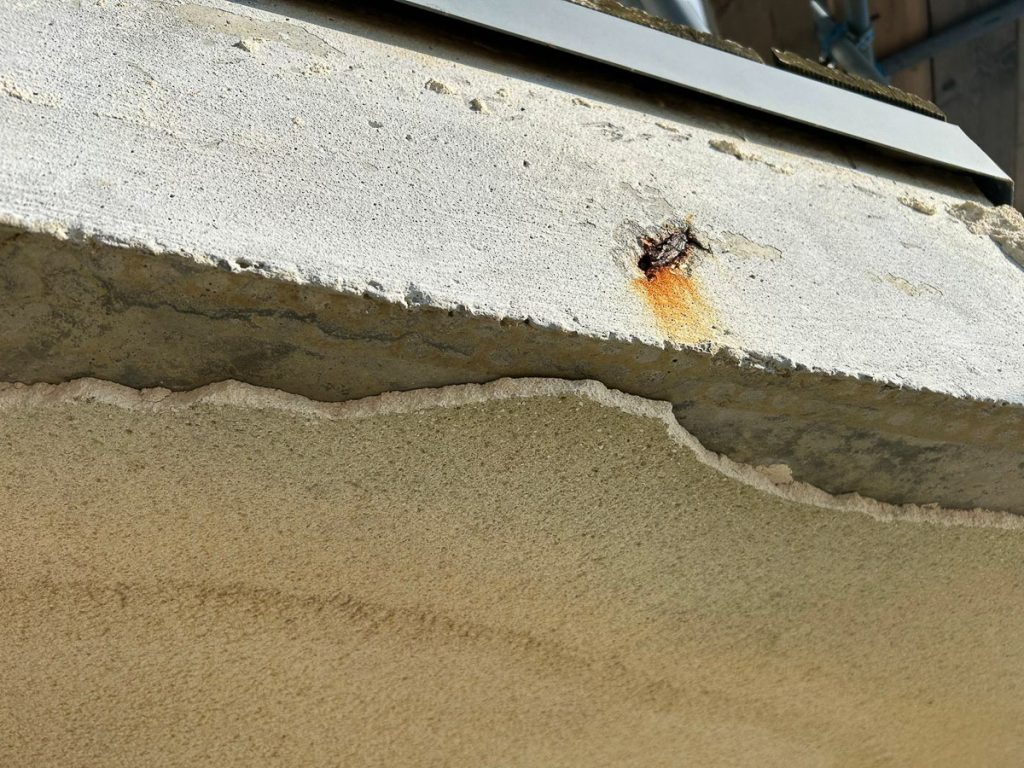
Coastal exposure accelerates deterioration due to:
These conditions cause:
Cement-based, silicone, acrylic and even lime renders are all vulnerable to these mechanisms because their chemistry and structure simply cannot cope with salt crystallisation and thermal movement.
Cork can — and does.
Cork is one of nature’s most resilient construction materials. Its cellular structure is uniquely engineered to withstand water, heat, UV, compression, and movement — exactly the threats found on coastal sites.
Cork contains a waxy biopolymer called suberin, which makes every cell naturally:
Salt cannot penetrate cork. It cannot bind to the surface. It cannot crystallise inside the material.
This property alone eliminates the root cause of coastal render failure.
Each cubic centimetre of cork contains over 40 million sealed, flexible cells.
When salt accumulates on the surface and begins to crystallise, the cork:
Rigid coatings cannot adapt — but cork can.
Salt failure occurs when water carries chlorides deep into the render.
As the salt dries, it expands, shattering the coating from within.
Cork’s hydrophobic, sealed cell walls block saline penetration entirely.
There is no internal crystal growth and no internal expansion force.
This is why SprayCork outperforms cement, lime, silicone and acrylic by orders of magnitude.
Cork is unique in that it:
This prevents:
Exactly the behaviours needed on exposed, solid-wall buildings.
Coastal walls move more than inland walls due to:
DECOPROYEC® SprayCork flexes with the building.
It does not crack.
It does not craze.
It does not open micro-gaps for salt to enter.
No rigid thin-coat render can mimic cork’s movement capability.
ECOPROCORK® provides the full certified system:
Essential for coastal substrates.
The core coastal solution.
SprayCork is the layer that delivers unmatched coastal durability.
For direct sea-facing or storm-impact elevations.
Used to:
| Performance Category | SprayCork | Cement | Acrylic | Silicone | Lime | Polymer/Monocouche |
|---|---|---|---|---|---|---|
| Salt Resistance | ⭐ Excellent | ❌ Very Poor | ❌ Poor | ⚠ Moderate | ❌ Poor | ❌ Poor |
| Crack Resistance | ⭐ Outstanding | ❌ Low | ⚠ Low | ⚠ Medium | ⚠ Medium | ❌ Low |
| Breathability | ⭐ High | ❌ None | ⚠ Minimal | ⚠ Limited | ⭐ High | ❌ None |
| Resistance to Wind-Driven Rain | ⭐ Excellent | ❌ Poor | ⚠ Moderate | ⭐ High | ❌ Poor | ❌ Poor |
| UV Resistance | ⭐ Excellent | ⚠ Fair | ⚠ Fair | ❌ Chalking | ❌ Poor | ⚠ Moderate |
| Thermal Performance | ⭐ High | ❌ None | ❌ None | ❌ None | ⚠ Low | ❌ None |
| Movement Accommodation | ⭐ Exceptional | ❌ Very Low | ⚠ Low | ⚠ Moderate | ⚠ Some | ❌ Low |
| Maintenance Needs | ⭐ Very Low | ❌ High | ⚠ Medium | ⚠ Medium | ❌ High | ❌ High |
| Coastal Longevity | ⭐ Outstanding | ❌ Poor | ⚠ Moderate | ⚠ Good | ❌ Poor | ❌ Poor |
| Retrofit/PAS 2035 | ⭐ Ideal | ❌ Not suitable | ❌ Not breathable | ⚠ Often unsuitable | ⭐ Suitable | ❌ Not breathable |
Result: Only cork meets all the critical performance categories required for UK coastal exposure zones.
The most expensive failure mechanism is eliminated.
No repainting, no colour fade, no chalking.
Lower condensation, fewer cold spots, better energy efficiency.
Breathable, flexible, non-invasive.
A system designed for the environment — not one struggling against it.
DECOPROYEC® SprayCork is the only render material that naturally resists the destructive effects of salt, wind-driven rain, thermal shock and moisture cycling.
It provides:
For trades looking for a robust, modern coastal solution, cork is not an alternative — it is the benchmark.
ECOPROCORK® supplies the certified DECOPROYEC® system with:
If you need a render that truly survives the coast, this is it.

