
Residential exterior · Harborne, Birmingham · West Midlands
Render that stays fresh.
Seven years on.
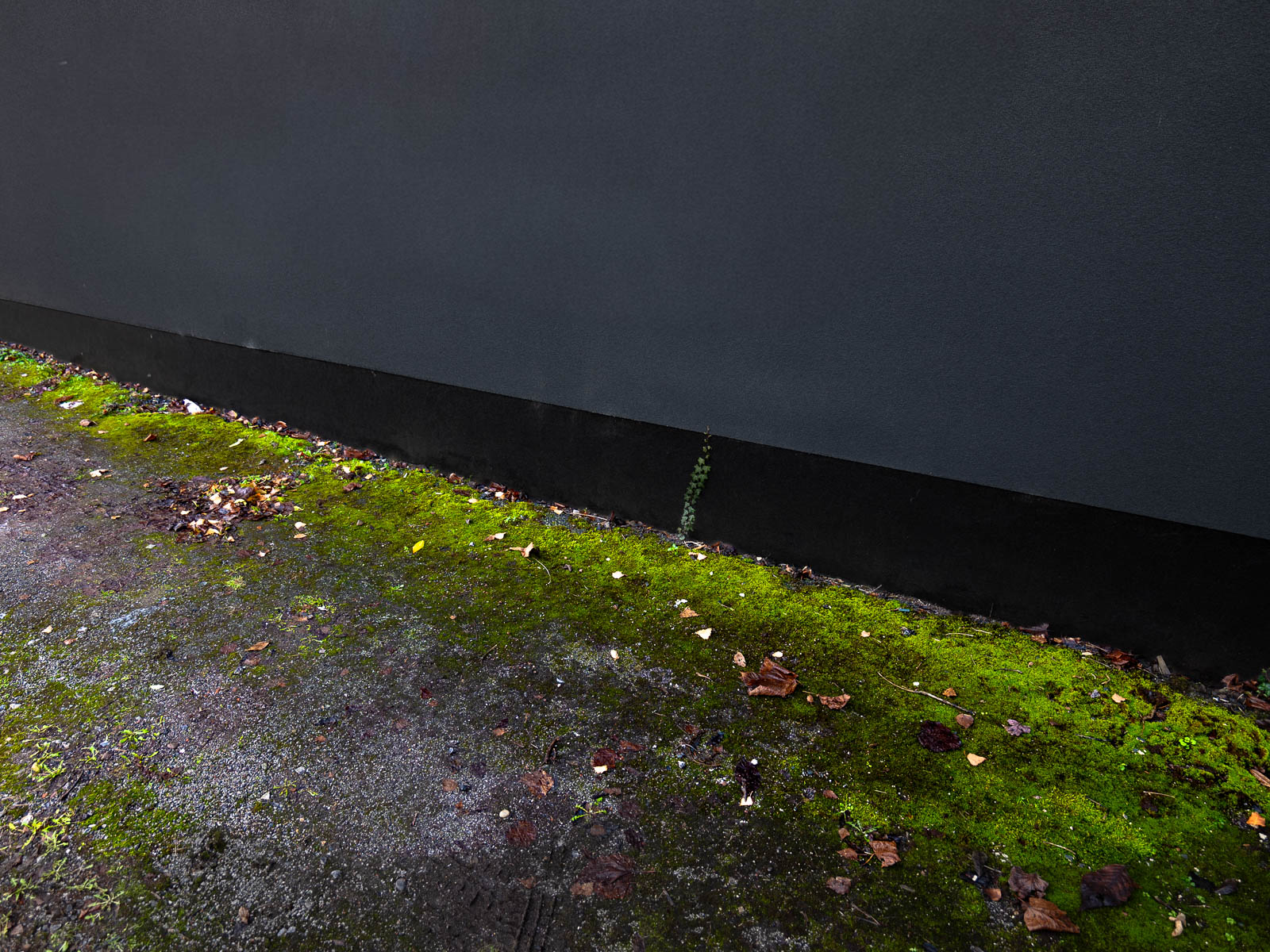
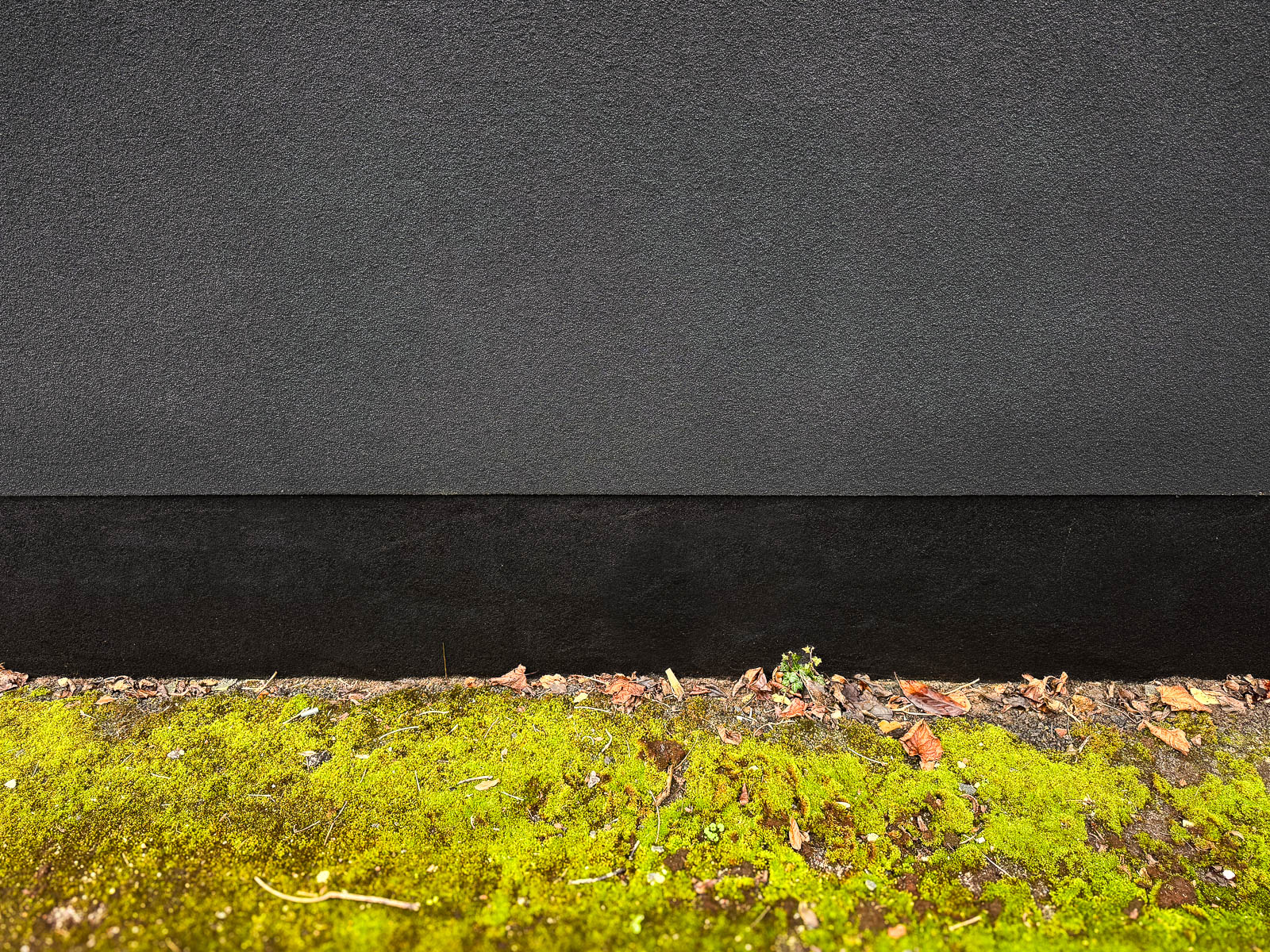
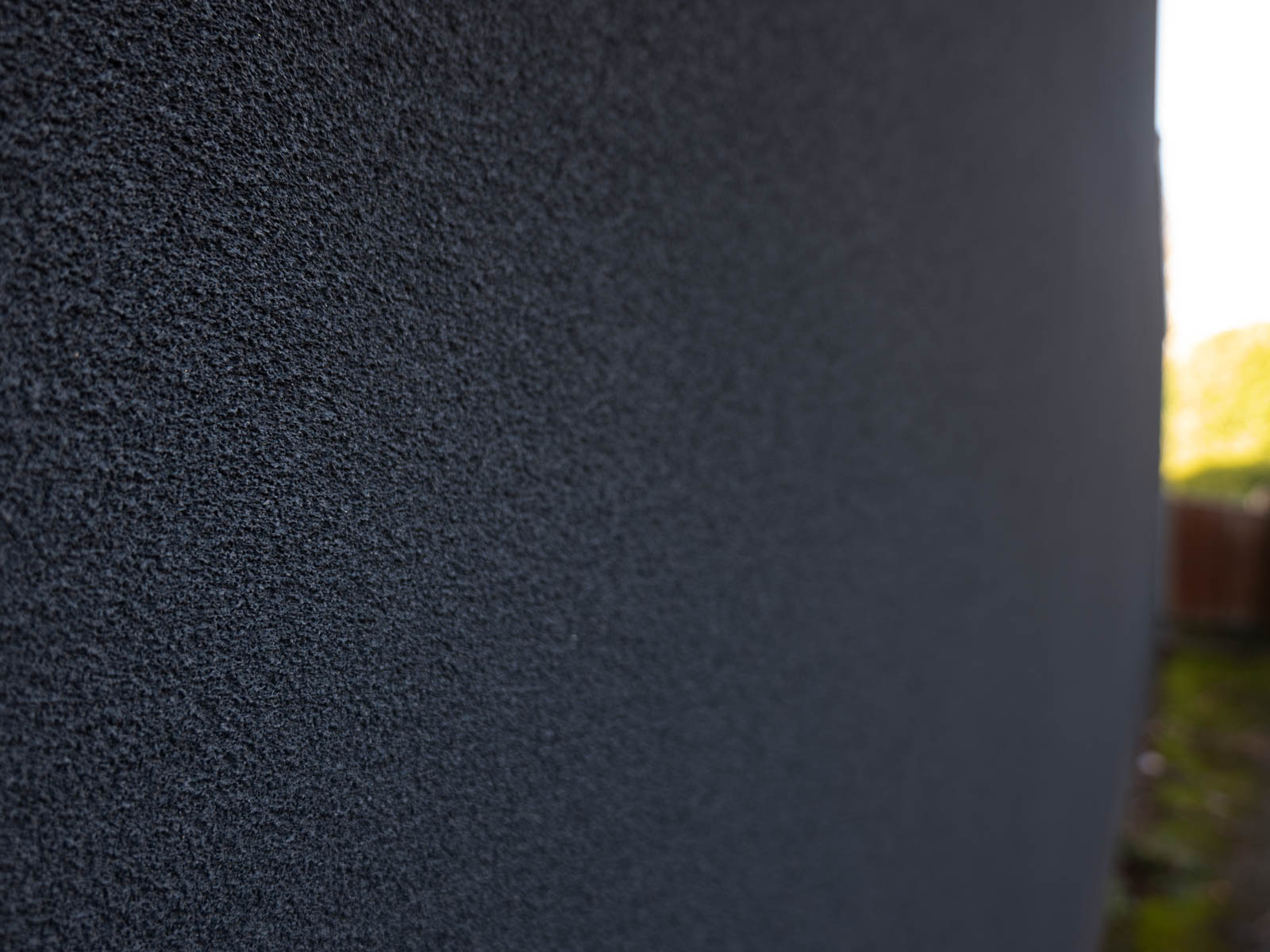
A Victorian end-terrace home with a heavily shaded exterior, serious cold and damp concerns, and persistent lichen and moss growth. The standout benefit is the lasting appearance: seven years after the SLICS™ installation, ECOPROCORK reports that lichen, algae and moss have not returned to the treated wall. The supplied follow-up photographs show a clear cork-coated surface beside moss-covered paving.
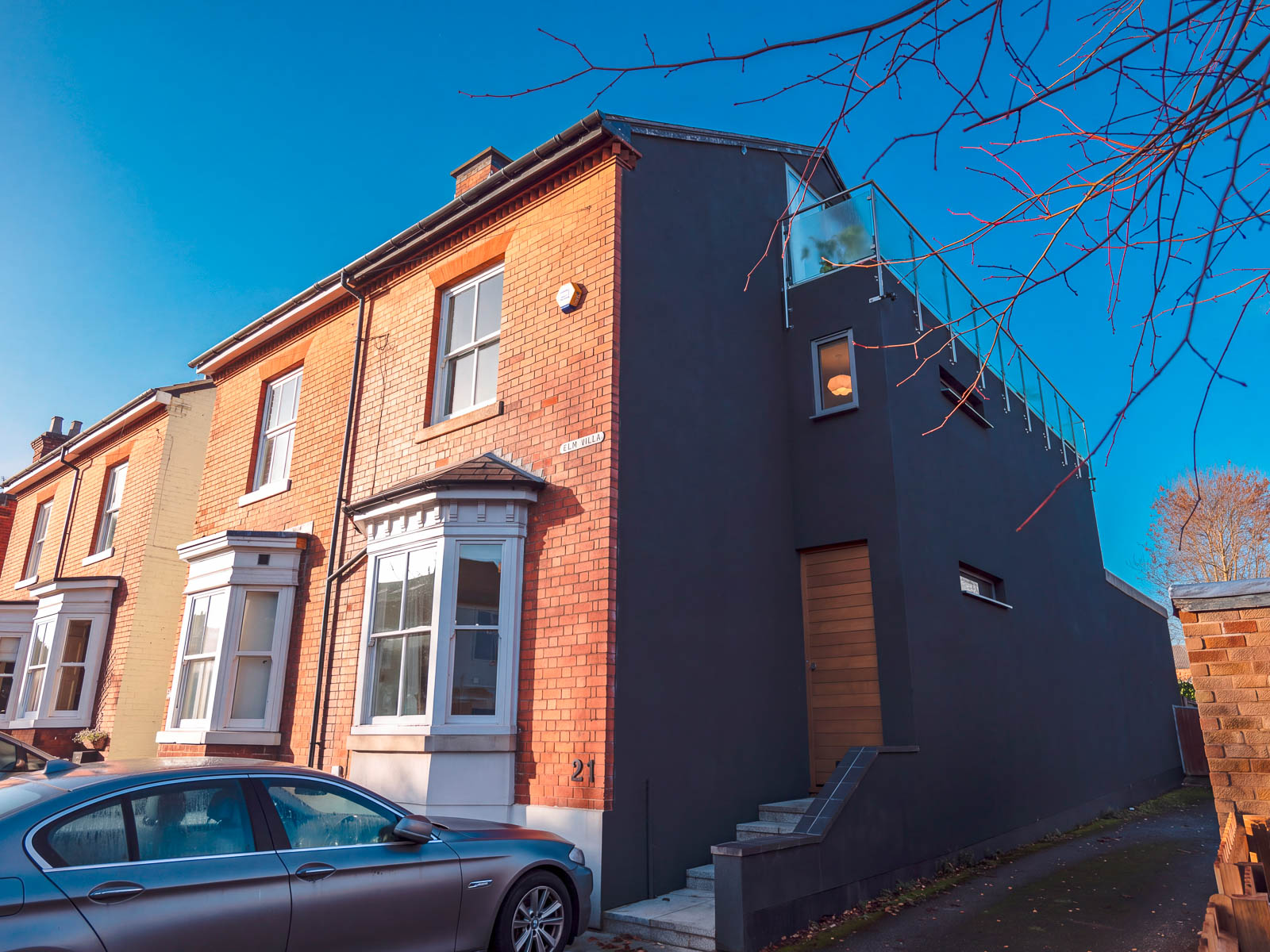
The original problem
A shaded wall. A cold home.
The project account describes severe cold and damp at this Victorian end-terrace property in Harborne, Birmingham. Its very shaded exterior suffered from lichen and moss growth. Inside, cold walls, condensation and black mould were also reported.
The brief called for a full exterior installation rather than a cosmetic refresh alone. These original concerns formed the context for selecting the refurbishment build-up.
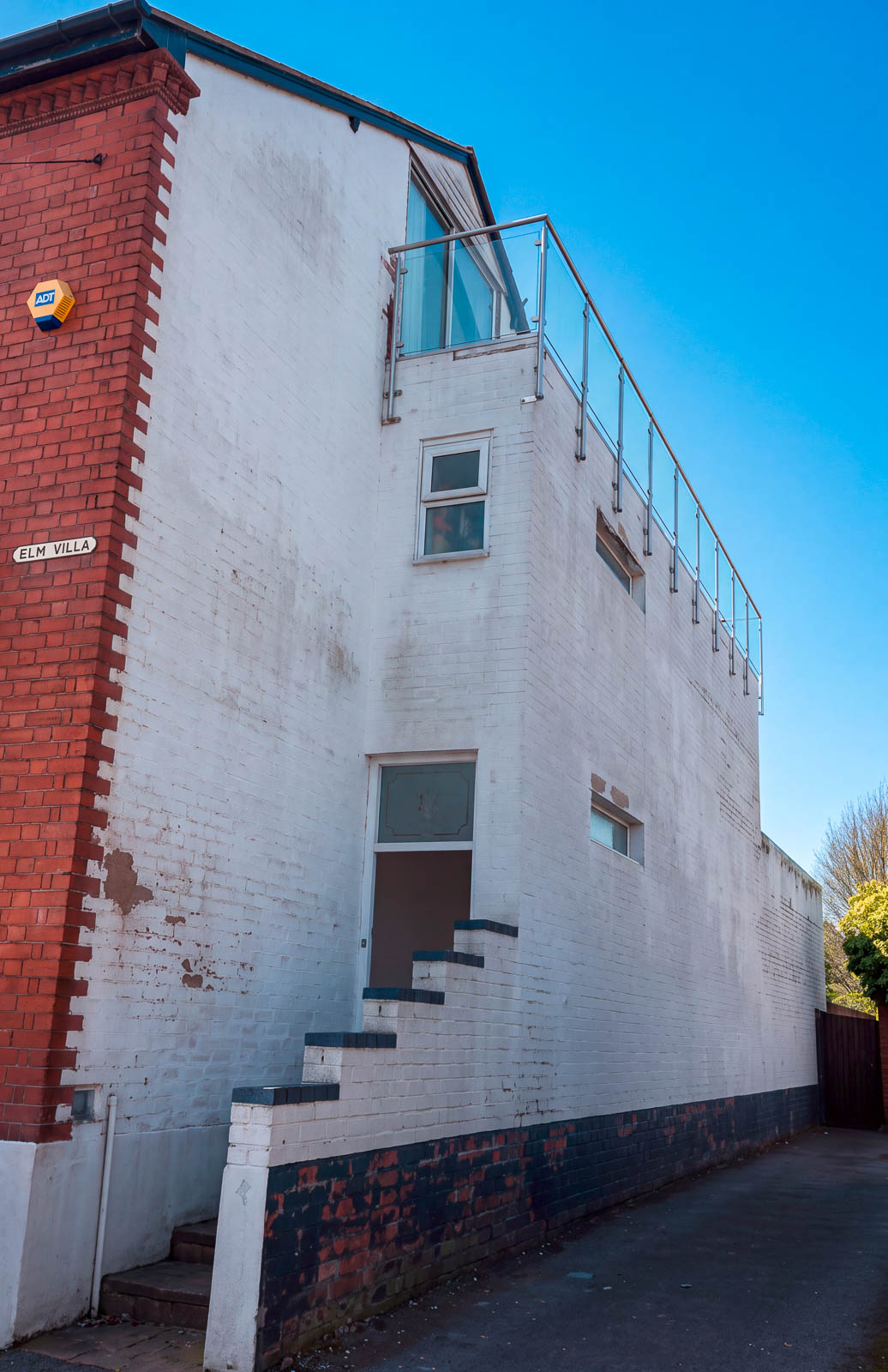
The system used
Lime and cork basecoat. SLICS™ spray cork.
The existing ECOPROCORK project record identifies a lime and cork basecoat with the ECOPROCORK® SLICS™ spray cork system. SLICS™ is the Sprayed Layered Insulation Cork System. The photographs record the full exterior installation and the resulting dark textured finish.
For your own property, confirm the substrate condition, preparation, repairs and complete proposed build-up with the applicator. Explore ECOPROCORK cork systems and the supporting technical evidence.
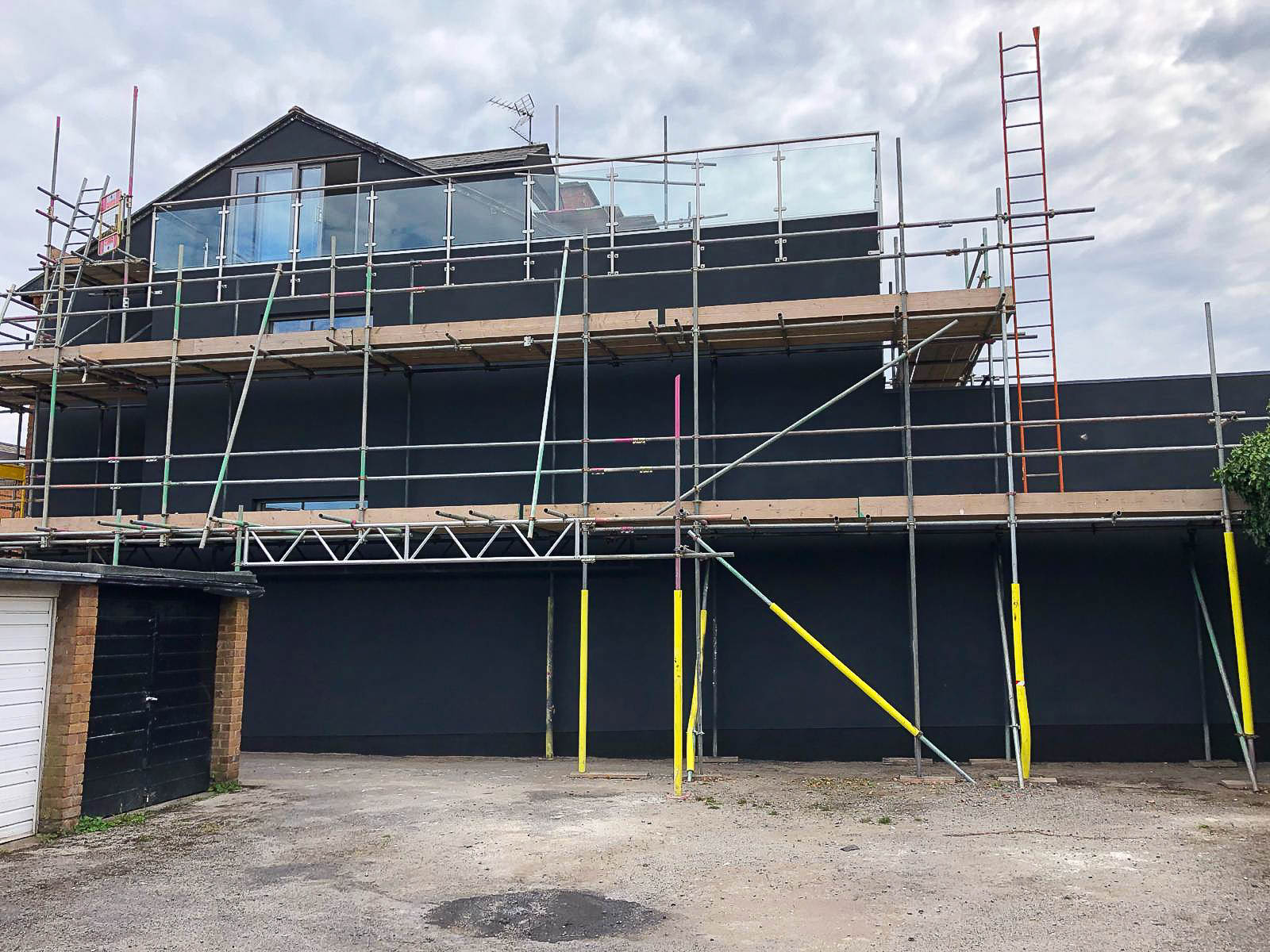
The long-term follow-up
Resisting lichen, algae and moss. Keeping the exterior fresh.
ECOPROCORK’s project account reports that lichen, algae and moss have not returned to the treated wall. The supplied follow-up photographs show the contrast clearly: the coated wall appears free of visible moss and lichen while green moss remains on the adjacent paving.
Why cork’s natural suberin matters
Cork naturally contains suberin, a major component of its protective cell walls. The manufacturer describes suberin and cerin as contributing to cork’s resistance to decay; research also identifies suberin’s role in forming a barrier within cork cell walls. These natural properties help explain the material choice. The Harborne follow-up records the appearance of this installed finish in its own shaded setting.
Manufacturer’s information on natural cork → · Research on suberin and cork cell walls →
The installation age has been confirmed as seven years. This is an individual project observation, supported by exterior photography. The supplied record does not include measured indoor temperature, humidity, energy savings or a documented post-installation assessment of the internal mould and condensation.
Choosing a render for a shaded exterior?
If you are comparing cement, silicone or monocouche render with spray cork, look beyond the initial colour. Ask how the specified finish deals with moisture, organic growth and ongoing maintenance in your building’s setting. Weber’s guidance notes that monocouche render is not immune from organic growth; some render formulations also include enhanced algae resistance. The Harborne case study offers a practical SLICS™ follow-up to consider alongside product-specific evidence.
Read our guide to algae-resistant render for exterior walls and compare cork systems. Weber’s guidance on algae and rendered walls →
Planning a similar project in Birmingham?
If your home in Harborne or elsewhere in the West Midlands has a weathered exterior, cold walls or moisture concerns, start with an assessment of the building. Share your postcode and photographs with ECOPROCORK so we can discuss suitable next steps and check Approved Applicator availability.
Explore exterior refurbishment solutions, cold-wall guidance and the mould guide. Damp and condensation require assessment of their causes, including ventilation, heating and moisture sources.
Where is this spray cork project?
This case study concerns a Victorian end-terrace home in Harborne, Birmingham, in the West Midlands.
How old is the installation?
ECOPROCORK has confirmed the installation was carried out seven years ago. The exact completion date has not been supplied.
What does the photographic follow-up show?
The coated exterior wall appears visibly clear beside moss-covered paving. ECOPROCORK reports that lichen, algae and moss have not returned to the treated wall.
How do I find local installation support?
Use the Approved Applicator directory or request an Approved Applicator. Confirm postcode coverage, availability and the specification for your building before booking.