
Advice & Guides · Reviewed 21 October 2026
SLICS-R: decide whether to refurbish, insulate or replace
For factory owners and facilities teams, the first decision is whether the roof remains serviceable. SLICS-R is ECOPROCORK’s specialist roof refurbishment route. Roof protection, an interior surface treatment and a substantial insulation upgrade are different scopes: ask the surveyor and contractor to state which outcome each quoted layer provides.
Build a useful roof brief
- Existing covering: identify steel or suspected asbestos-cement, age where known, previous coatings and available surveys.
- Defects: record leaks, corrosion, damaged sheets, fixings, laps, penetrations and rooflights. Coatings cannot replace lost structural capacity.
- Business needs: state operating hours, access restrictions, sensitive stock or equipment and any permitted shutdown periods.
- Performance: define weatherproofing, condensation, heat-loss or acoustic objectives separately. Obtain assembly-specific calculations or test evidence for a quantified claim.
Compare quotations on the same basis
A refurbishment quote should identify the treated faces, access and protection, preparation, repairs, each product and thickness, waterproofing details, inspection and maintenance. Compare replacement against the same required thermal outcome. The commercial roof guide contains an illustrative cost model; it is not SLICS-R pricing or proof of a saving on your roof.
Evidence and installation responsibility
Ask for the current SLICS-R build-up and any applicable certificate, including its substrate, application and validity limits. A wall-applicator listing does not prove roof or asbestos-work competence. The appointed specialist must assess the condition, access method and controls. Encapsulation leaves asbestos in place and requires continued management. Use the technical library as a document route, with the actual project documents agreed before appointment.
Start a commercial roof assessment. Provide approximate area, postcode, roof type and existing survey records, using photographs already available or taken safely from ground level. Ask for a relevant completed roof project with dated records; no unnamed roof photograph should be treated as a verified performance case study.
Commercial roof refurbishment with SLICS-R™
Introduction
A cold, leaking or weather-worn roof can disrupt daily work and make a building harder to look after. ECOPROCORK® Sprayed Layered Insulation Cork System for Roofs (SLICS-R™) is a specialist refurbishment route combining compatible preparation, waterproofing and cork-based layers for suitable roofs. Start with the roof’s condition, then agree the repairs and complete specified build-up your property needs.
Where assessment supports restoration, refurbishment may extend service life and reduce the need for replacement materials. Compare the scope, costs and expected performance against replacement for your actual roof; savings cannot be promised as a fixed fraction. Suspected asbestos requires specialist assessment and an appropriate controlled work plan before any preparation.
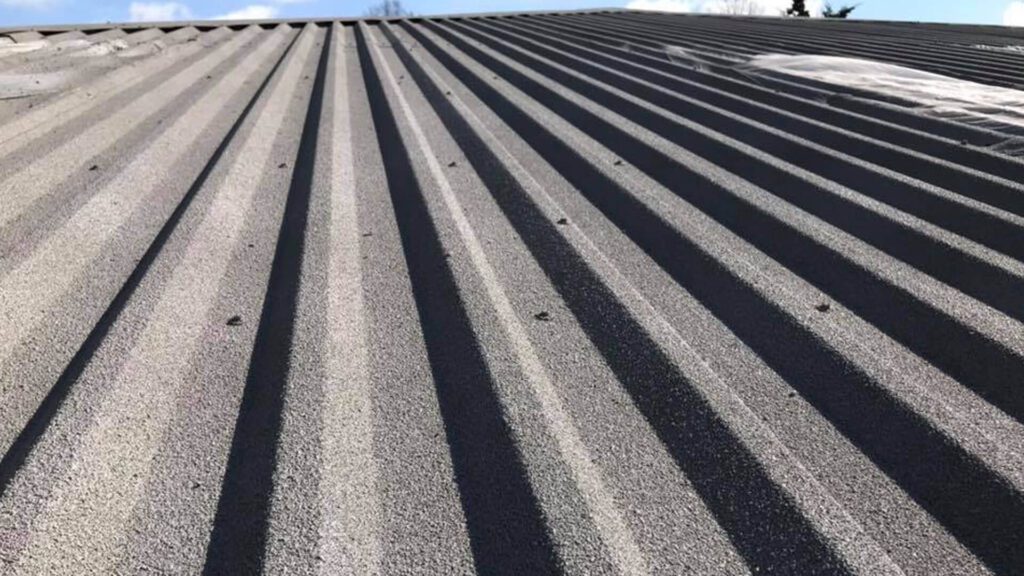
Assessing thermal improvement for your factory
Cork-based treatments can form part of a roof’s thermal improvement. The benefit depends on the existing roof, the specified system, installation quality and how the building is used. Ask for the relevant technical information and a project-specific assessment before estimating energy savings; there is no single saving that applies to every factory.
Planning a more comfortable workspace
If your workspace overheats in summer or feels cold in winter, consider the whole roof and building. Insulation, ventilation, air leakage and heating all affect comfort. We can help you explore where a SLICS–R™ refurbishment fits within that plan and which performance evidence is relevant to your specification.
Waterproofing and specialist roof assessment
Leak protection depends on a complete waterproofing build-up, sound preparation and careful treatment of joints, penetrations and edges. Existing leaks and defects need assessment before work begins. Where asbestos-cement roofing is present, obtain specialist advice on its condition and whether encapsulation is appropriate. A coating does not remove the asbestos: competent assessment, suitable controls and ongoing management remain essential. See HSE guidance on asbestos risk assessment.
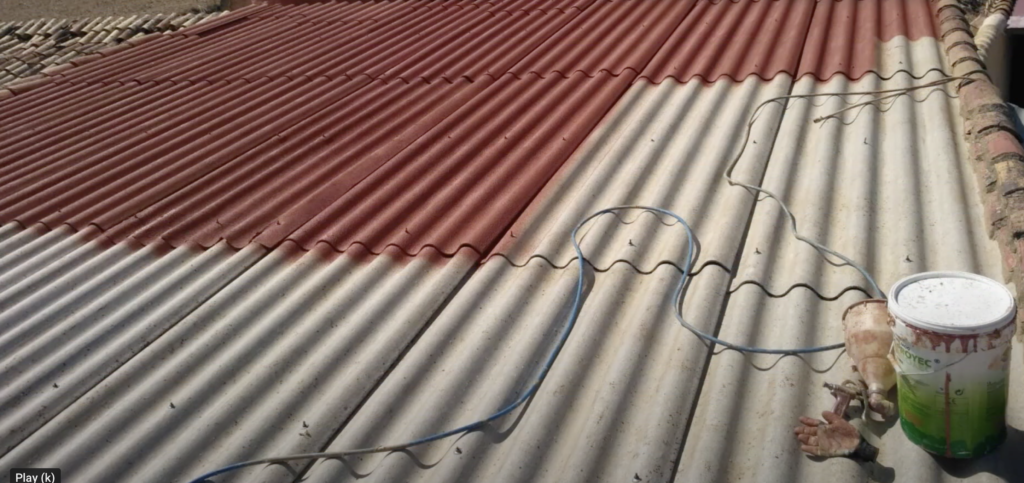
Some qualifying asbestos-remediation expenditure may be eligible for Land Remediation Relief. Eligibility depends on the company, property and work involved, so ask your tax adviser to assess the proposed works before relying on any relief. Read HMRC guidance on qualifying asbestos-removal costs.
Discussing roof noise and acoustic performance
If rain noise or external sound is a concern, include it in your project brief. Acoustic performance depends on the complete roof assembly and the source of the noise. Ask what test information is available for the proposed build-up rather than assuming a particular reduction.
Prepare your roof assessment
A successful roof refurbishment starts with a clear brief: the roof’s condition, the problems you want to address, the required performance and the practical needs of your business. Share photographs and project details with our team so we can discuss the suitable systems, evidence and next steps. Explore professional project support.
Planning a factory, workshop or commercial roof project? Explore our SLICS-R commercial roof refurbishment and asbestos encapsulation service. Talk to ECOPROCORK® about the existing roof and the improvement you want. We’ll help you identify the information needed before choosing your refurbishment route.
What to share with the technical team
Provide the property postcode, approximate roof area, construction, known defects, existing survey information and safely available photographs. State operating hours and what needs to improve. General SLICS/TLICS directory approval is not proof of specialist roof or asbestos-work competence.
Move from information to an assessed project
Use the commercial roof assessment route for project scoping. Compare the system family, request relevant technical documents and consult HSE guidance. No automatic tax relief, fixed saving or universal roof-life extension is promised.
Find guidance for wall and roof problems · Check local applicator availability
Plan your next step
Use project images and articles as a starting point. Check the current evidence and suitability for your building before agreeing a specification.


