
ECOPROCORK® SOLUTIONS · MARINE, BARGES & HOUSEBOATS
Natural cork. An elastic finish. Two spray-applied coats that follow the shape of your vessel.
ECOPROCORK® SLICS™ — Sprayed Layered Insulation Cork System — brings the layered spray-cork approach used on brick properties to suitable prepared marine interiors. Built up in two coats, it creates a compact, adherent cork layer around accessible panels, curves and framing.
An ideal option to explore for barge and houseboat conversions where space, application efficiency and everyday comfort matter. We help you specify the preparation and complete build-up for your vessel.
A compact, elastic and highly adherent cork coating, built in two coats. Here is what those characteristics can bring to a marine conversion, with the evidence kept alongside each benefit.
| Feature | Benefit for your project | Evidence and specification |
|---|---|---|
| Two-coat layered application | Builds cork coverage in successive coats, following the layered approach used on brick properties. | Specify the total dry thickness, coverage and drying between coats for the marine substrate. |
| Compact insulation layer | Preserves useful space around headroom, storage and the interior fit-out. | λ = 0.050 W/m·K is the source-reported material conductivity. Thermal resistance depends on thickness; additional insulation may be needed. |
| Elasticity and flexibility | A flexible coating that can accommodate limited movement within its specification. | Source-reported elongation at break: 34.6%, UNE-EN ISO 527-4. This is a material result, not a permitted hull-movement or crack-width limit. |
| Strong adhesion | Bonds to suitable prepared surfaces, including awkward accessible contours. | Source-reported adhesion: 0.65 N/mm², UNE-EN 1542:2000. This does not establish adhesion to every steel or paint system; confirm preparation, primer and trial areas. |
| Continuous surface coverage | Coats accessible panels and framing with less cutting and fitting around each detail. | Inspect coverage before lining. Detail joints and penetrations; do not claim all thermal bridges are eliminated. |
| Efficient spray application | A practical process for covering large areas and complex shapes. | Programme depends on access, preparation, coat thickness and drying; no fixed installation time is claimed. |
| Condensation management | Contributes to a build-up that addresses cold internal surfaces and comfort. | Coordinate insulation, ventilation, heating and moisture sources. Results depend on the complete vessel design. |
| Vapour permeability | A vapour-permeable cork coating within the specified lining. | Sd = 0.35 m, Class I, EN ISO 7783, as reported in the sprayed-cork datasheet. The steel hull itself remains vapour-impermeable. |
| Acoustic comfort | Cork’s damping characteristics offer potential benefits around resonant panels and rain noise. | No verified vessel-specific decibel reduction is available; performance depends on the assembly. |
| Reaction-to-fire performance | Documented product evidence to inform material selection. | C-s1,d0 to EN 13501-1:2018, AITEX 2024AN1825, within the tested specimen and mounting scope. This is not a fire-resistance duration or marine approval. |
| Marine and saline exposure | A cork-based material worth considering in waterside applications. | The datasheet references UNE-EN ISO 9227:2006 but supplies no result or exposure duration. Confirm intended exposure; do not infer corrosion protection or immersion suitability. |
| Surface encapsulation | An adherent coating that covers suitable prepared surfaces. | Encapsulation describes surface coverage; suitability depends on the material being covered and the specified system. |
| Asbestos encapsulation — specialist applications | Asbestos encapsulation is listed among the sprayed-cork datasheet’s applications. | A separate, specialist-assessed use requiring applicable supporting evidence and a specified method. It is not established for this vessel, and the available listing alone does not verify asbestos certification. |
| Natural cork and resilient finish | Brings cork granules into a practical textured coating for suitable interior surfaces. | The formulated coating contains a binder; assess the selected grade and current safety/application documentation. |
Quantified values above are source-reported sprayed-cork material properties, except the reviewed AITEX classification. They do not certify a complete two-coat SLICS™ marine installation or transfer automatically to other grades. Confirm the selected product, substrate and complete build-up.
A demanding demonstration. A clear reason to look closer. Watch DECOPROYEC® spray cork on a pizza-oven steel hot plate — a practical illustration of the coating in a challenging heat setting.
For steel-bodied vans, barges and houseboats, it is a useful starting point for understanding why the cork layer matters. Talk to ECOPROCORK about the product, thickness and complete build-up for your conversion.
Practical demonstration; results apply to the conditions shown. It does not establish a vehicle or vessel U-value, energy-saving percentage, condensation outcome or fire classification. Use the relevant technical evidence and project specification.
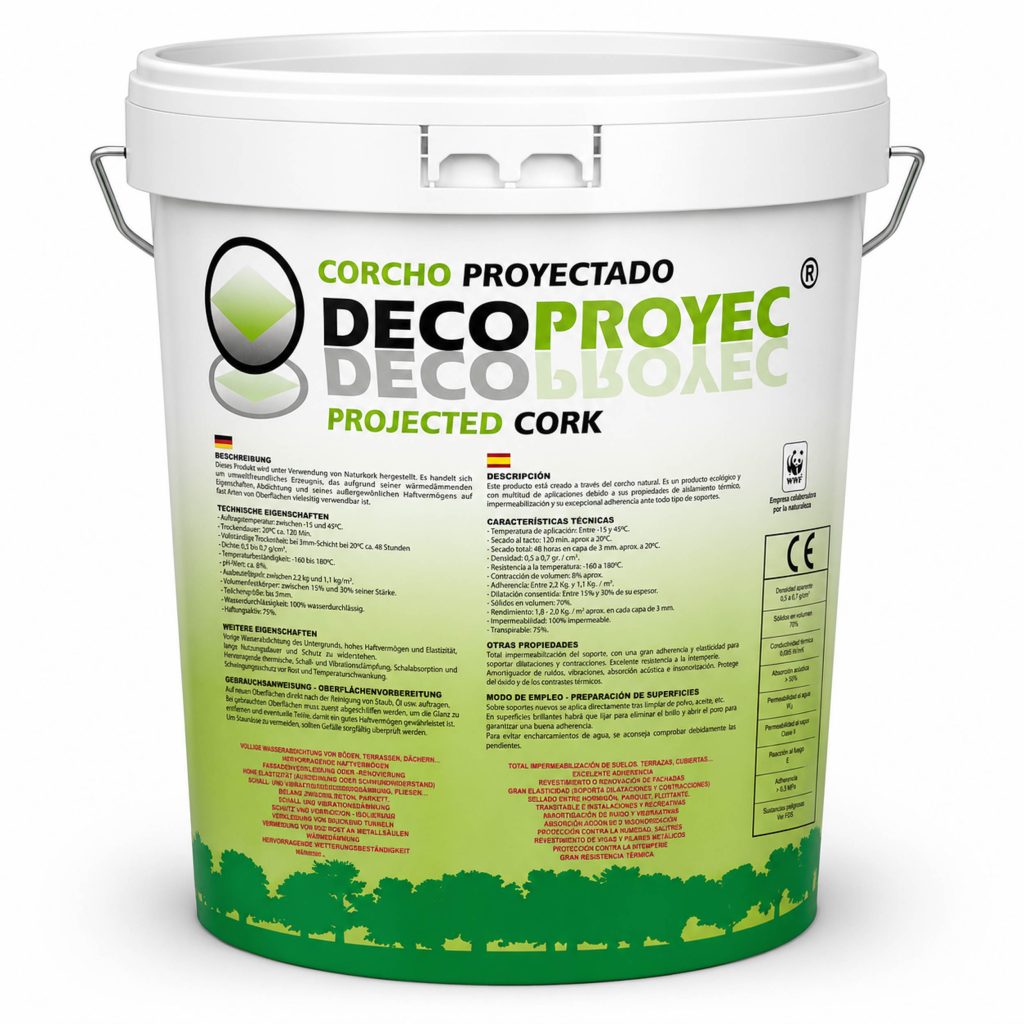
A high-quality product. A process proven through practice. DECOPROYEC® spray cork is the material at the heart of ECOPROCORK® SLICS™: natural cork granules combined with a binder to create an elastic, highly adherent coating.
Testing runs from the factory to the ECOPROCORK Academy. Product quality, application methods, equipment setup and the finished coating are checked and refined through practical use. That experience supports the product we supply and the techniques we teach.
Independent laboratory evidence adds another layer of confidence. Read the documented product values and fire-classification scope below, then speak to us about the grade and build-up for your vessel.
The following values relate to documented DECOPROYEC sprayed-cork material and test evidence. Confirm the selected grade and proposed marine application with ECOPROCORK.
| Property | Documented value and scope |
|---|---|
| Reaction to fire | C-s1,d0 to EN 13501-1:2018 — AITEX 2024AN1825, within its documented specimen, substrate, thickness and mounting scope. |
| Thermal conductivity | λ = 0.050 W/m·K — source-reported material value; installed thickness and the complete build-up govern thermal performance. |
| Water vapour permeability | Sd = 0.35 m, Class I — source-reported value under EN ISO 7783, describing the coating’s resistance to water vapour. |
The saline-exposure reference gives no result or duration and does not establish corrosion protection or immersion suitability. C-s1,d0 describes reaction to fire, not a duration of fire resistance, non-combustibility or marine fire approval. It must not be transferred automatically to DECO 00 FINO, TLICS™ or a complete boat lining. Thermal and vapour values are reported in the existing sprayed-cork datasheet; the underlying reports have not been independently reviewed here. Confirm applicability to the supplied grade and proposed installation.
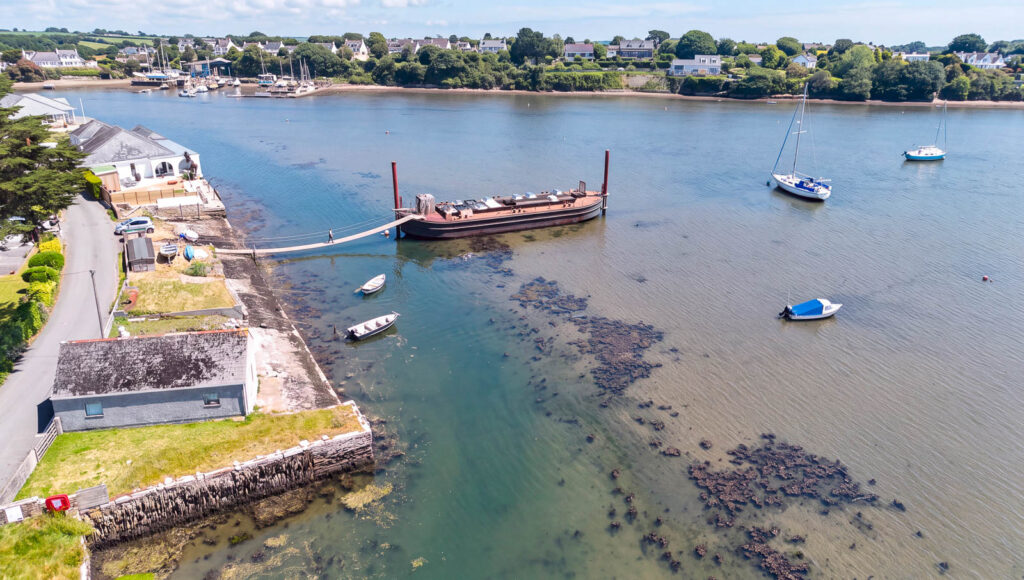
A substantial barge-to-houseboat conversion brings the SLICS™ marine solution into focus: a metal shell, a new residential layout and a need to preserve useful living space.
These project photographs show the vessel, exposed interior structure, spray application and fit-out in progress. Accessible framing and curved surfaces make the practical value of spray-applied coverage easy to see.
Visual estimate: the hull form and riveted construction suggest a traditional cargo barge, possibly dating from the late nineteenth or early twentieth century. This is a tentative interpretation of the photographs, not a verified type or build date; later alterations may obscure its history.
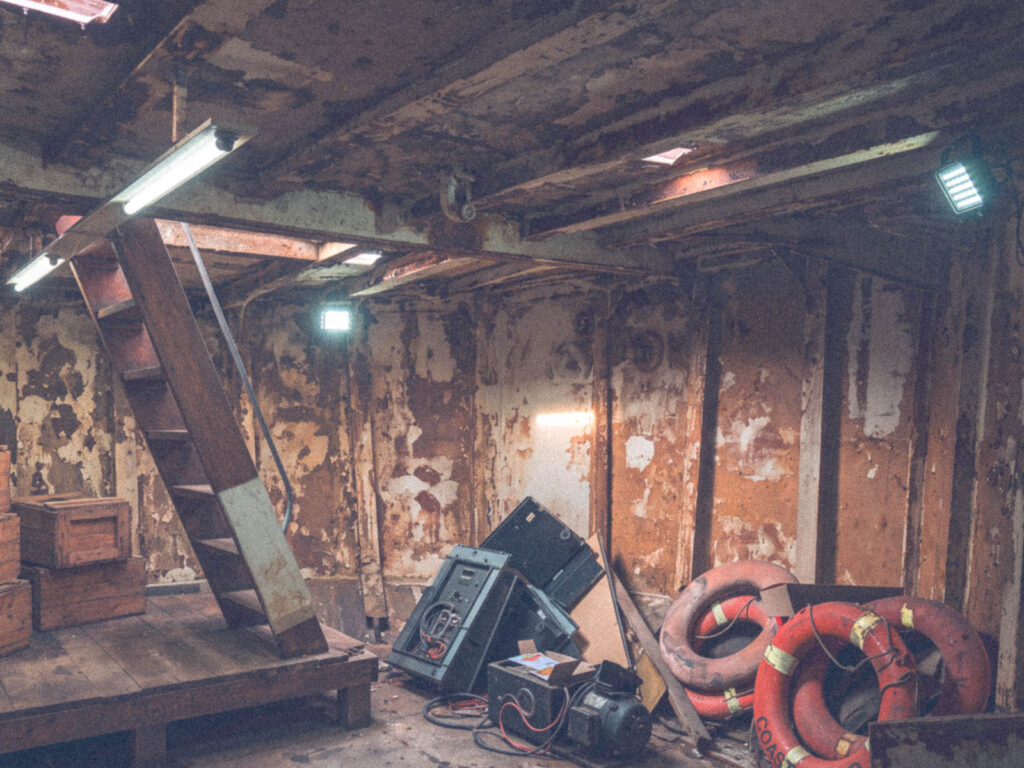
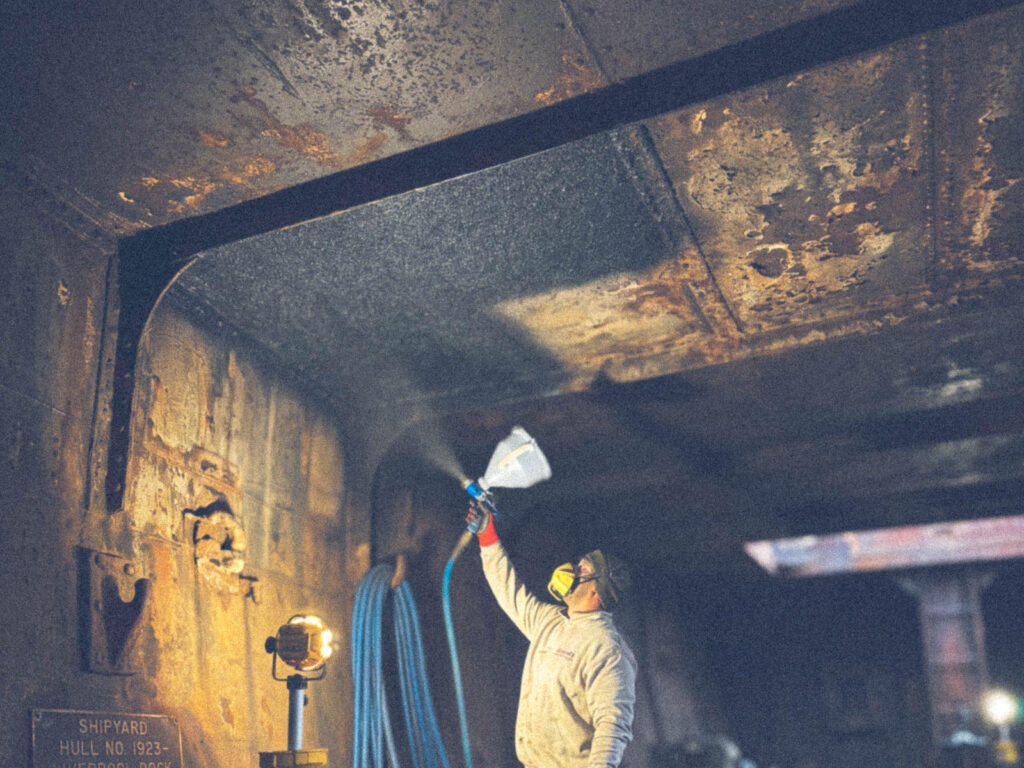

Whether you are converting your own houseboat, fitting out vessels for customers or specifying a commercial project, start with ECOPROCORK. We can help you review the surfaces, select the product and plan the two-coat SLICS™ application.
Assess the existing coatings and hull condition; agree corrosion treatment, salt removal, cleaning and compatible primers. Confirm adhesion on representative trial areas. Apply the first cork coat, allow the specified drying, then build coverage with the second coat to the agreed total thickness.
The layered principle is the same as on brick properties; steel preparation and marine detailing must suit the vessel. Coordinate additional insulation, ventilation, service access and fire requirements before lining.
Get trained at the ECOPROCORK Academy. Learn how to prepare surfaces, mix the material, set up the spray equipment and build the two-coat SLICS™ finish with control and consistency.
Product, spray gun, hose and compressor need to work together. We help you choose a compatible setup for the selected cork grade and required airflow, then show you how application technique and equipment adjustment affect coverage and finish.
Train with an integrated approach designed to deliver a consistent, high-quality result: suitable preparation, compatible equipment and a clear application method. Bring your marine project questions and discuss the additional checks needed for steel substrates and existing coatings.
Its thermal resistance is limited by thickness. Assess the complete hull, roof, floor and lining design for the intended season and occupancy.
This proposal concerns suitable interior surfaces. The evidence cited does not establish suitability for permanent immersion or use as an underwater hull coating.
Yes. Start with a technical discussion about the vessel, its coatings and proposed fit-out. Product and installation suitability need confirming before application.
Share your vessel photographs, approximate dimensions, existing coatings and fit-out plans. We’ll help you assess where cork belongs in the specification.
Owners: discuss your conversion. Boatbuilders and applicators: ask about preparation, supply and application. Commercial conversion teams: request a project specification discussion.