
ECOPROCORK® SYSTEMS · SLICS-M
Internal cork insulation for boats and narrowboats—shaped around life aboard.
SLICS-M brings spray-applied cork to suitable prepared interior surfaces, following accessible curves, panels and framing to create a compact, continuous cork layer.
For owners and fit-out teams, it is a practical way to bring cork into an insulation design where headroom, usable space and complex shapes matter.
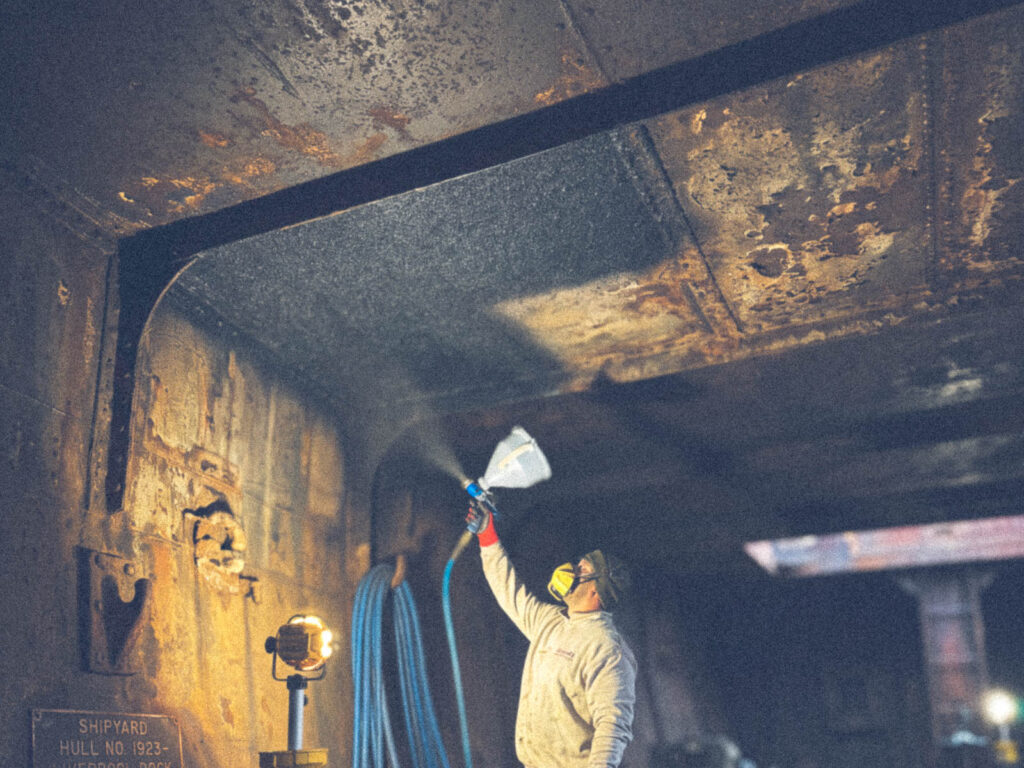
Spray application covers accessible contours and framing with less cutting and fitting around each detail. Plan the cork layer before the interior lining closes the structure.
A compact coating preserves useful space around headroom, cupboards and services. Its role and thickness are selected as part of the complete insulation and lining design.
Combine cork with the insulation, ventilation and heating strategy for your boat’s use. From a narrowboat refit to a barge or houseboat conversion, the right build-up starts with how you plan to live aboard.
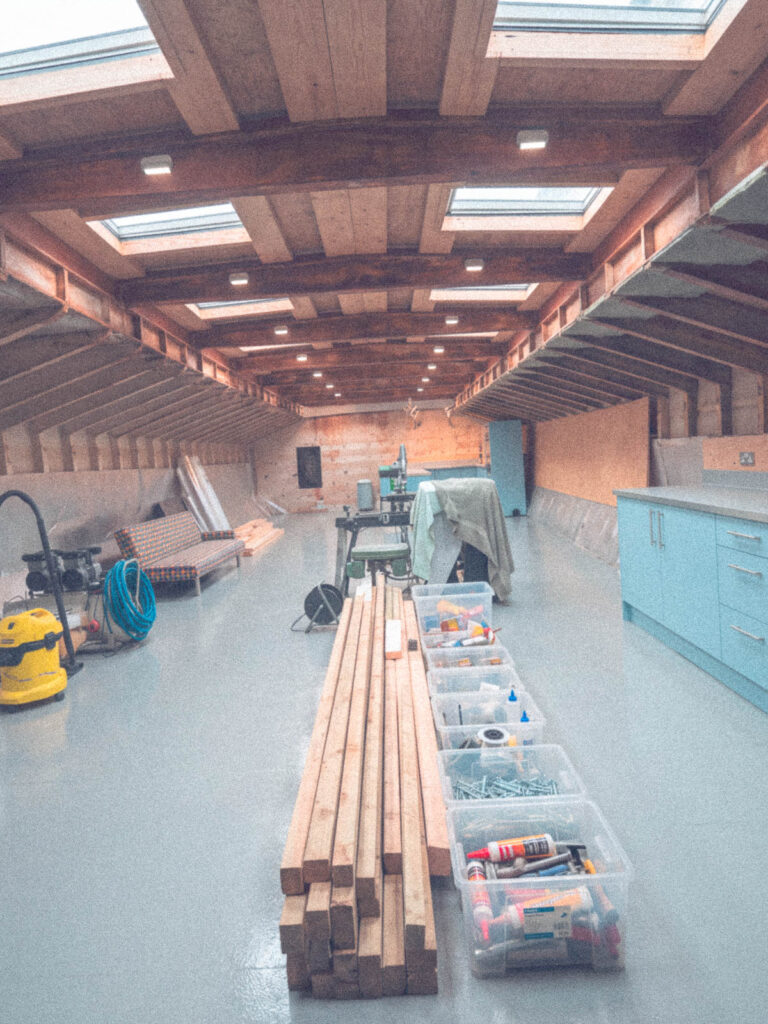
Explore the structure, application and interior fit-out in this barge-to-houseboat conversion. See how spray application works around the accessible contours of a vessel.


1 · Assess. Review the interior structure, existing coatings, moisture and corrosion. Agree cleaning, salt removal, corrosion treatment and compatible primers for the actual surface.
2 · Prove compatibility. Confirm adhesion on representative trial areas. Agree the product grade, total dry thickness, coat sequence and drying conditions.
3 · Build the cork layer. Apply in specified successive coats, checking coverage around accessible framing and details before lining.
4 · Complete the fit-out. Coordinate any additional insulation, moisture control, ventilation, heating, service access and fire requirements with your boatbuilder or competent designer.
Bring the right cork product, spray equipment and practical skills together. Choose your setup, learn effective application at the ECOPROCORK Academy and take that knowledge into your next project.
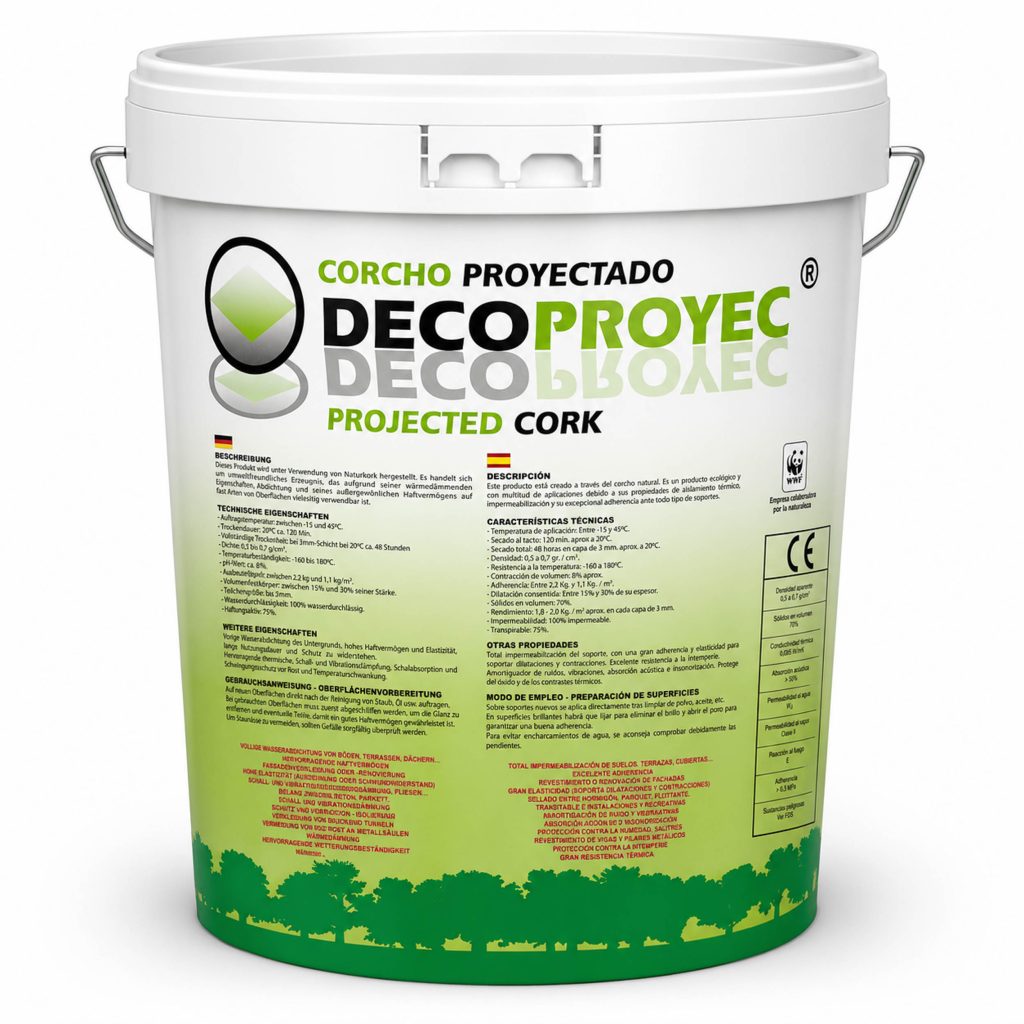
The spray-applied cork material at the heart of the SLICS approach. Explore colours, pack information and product details.
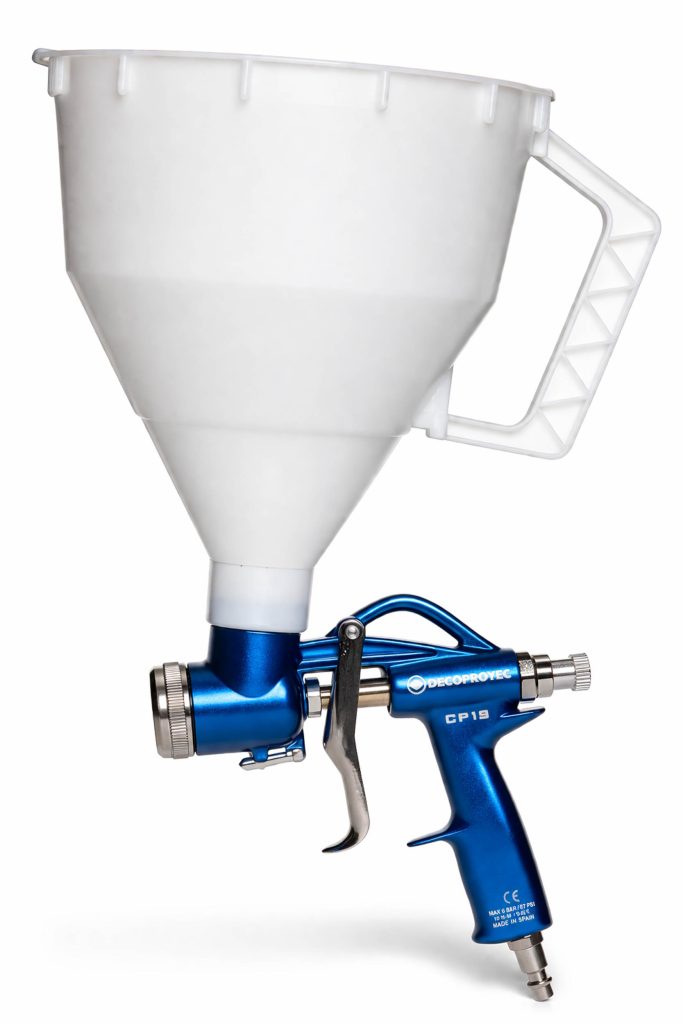
Explore the spray gun, hopper and nozzles, then discuss a compatible compressor and complete setup for your selected cork grade.
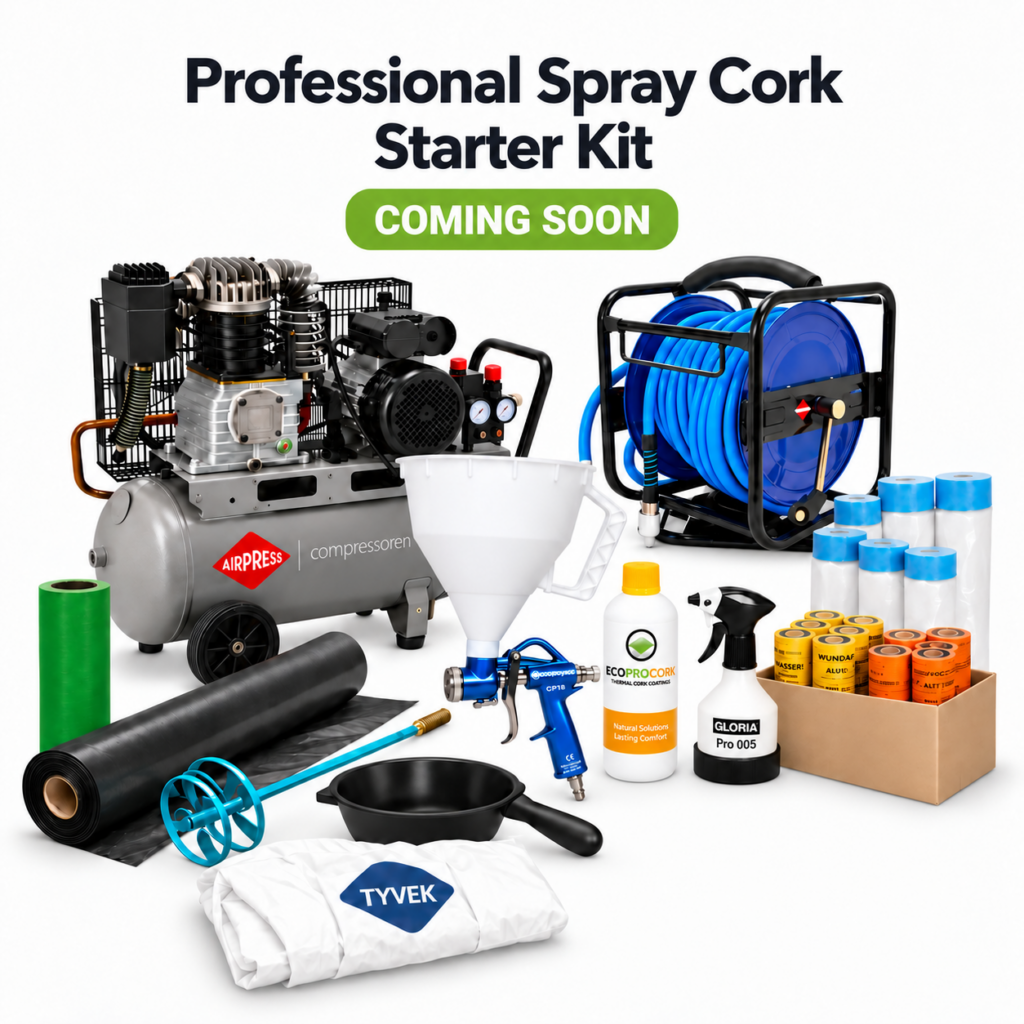
Explore the professional spray cork starter kit and discuss your equipment needs with us. The complete starter kit is currently listed as coming soon. Individual product availability is shown in the shop.
Get hands-on with preparation, mixing, equipment setup and controlled spray application. Bring your boat, narrowboat or property project to the training discussion so the application route matches your plans.
Agree substrate preparation, product compatibility and the complete build-up for each project before application.
SLICS-M is the name of the internal boat-insulation application route. Assess the selected product and complete vessel lining together.
On a small screen, swipe across the matrix to read every column.
| Property | Evidence | Application and scope |
|---|---|---|
| Thermal contribution | The cork layer adds thermal resistance in proportion to its verified properties and installed thickness. | The archived sheet quotes 0.050 W/(m·K); the historical AITEX mean is 0.0588. The annex has a thickness/resistance discrepancy. Obtain current grade-specific design data before calculations. Additional insulation may be needed; no vessel U-value or energy saving is established. |
| Adhesion and flexibility | Prepared-concrete adhesion and source-reported elongation relate to the tested material. | They do not establish adhesion to every steel, timber, GRP or existing paint system, or allowable hull movement. Confirm preparation, primer and trial areas. |
| Condensation and acoustic comfort | Cork can be considered within the comfort and moisture-control design. | Coordinate the full lining, ventilation, heating and moisture sources. A vapour-permeable coating does not make a steel hull vapour-permeable. No guaranteed condensation cure or vessel-specific decibel reduction is asserted. |
| Fire evidence | AITEX 2024AN1825 records C-s1,d0 to EN 13501-1:2018 within the documented sprayed-cork specimen and mounting scope. | Read classification and original reports. This is not IMO/MED, class-society or other marine approval, nor a fire-resistance duration or approval of the complete lining. Confirm the requirements for the particular vessel. |
| Intended exposure | This page concerns suitable internal boat and narrowboat surfaces. | Salt-spray testing does not establish immersion suitability, underwater hull protection or universal corrosion protection. Keep the specification within the confirmed internal use. |
Tell us whether you are refitting a narrowboat, insulating a boat interior or converting a barge or houseboat. Share photographs, dimensions, hull material, existing coatings, lining plans and intended use. We’ll help you explore where SLICS-M fits.